ATX vs XTF Suspension | Which Is Right for Your Off-Road Caravan?
This is one of the most common conversations I have with customers, one of the “if I had a dollar” kind of conversations.
“Should I go ATX or XTF on my suspension choice?”
And most people come into it thinking there’s a clear “better” option.
Well in my opinion, there isn’t. Not when you consider the pathways, and why they both co-exist. Cruisemaster has been designing and developing the best Australian engineered and manufactured suspensions for decades. Being the pioneers and the industry leaders in Suspension and trailer technology, for us at Elross Caravans, it’s a natural fit.
What matters in your decision making - is how their suspension fits into:
the type of van you’re building
how you plan to travel
and what you expect from it long term
First Things First — Both Systems Work
Before getting into it, I’ll be clear.
Both ATX and XTF are:
proven in off-road conditions ✅
widely used across serious touring builds ✅
capable of handling tough Australian environments ✅
So this isn’t about good vs bad.
It’s about choosing the right setup for the right application.
The Simple Way I Break It Down
When I’m explaining it one-on-one, I usually keep it simple:
XTF → durable, reliable, built for serious touring
ATX → more refined, more control, higher performance
That gives you a starting point.
But where it really matters is how that choice aligns with the van itself.
It’s Not Just Suspension — It’s the Platform
This is where most people get it wrong. They try to choose suspension in isolation.
But suspension should always match:
the chassis design
the weight and load of the van
the overall level of the build
For example, in our range:
XTF typically sits on our ECX Off-road Caravans
strong, capable off-road vans 💪🏽
focused on durability and function 🔬
more straightforward touring setups 📏
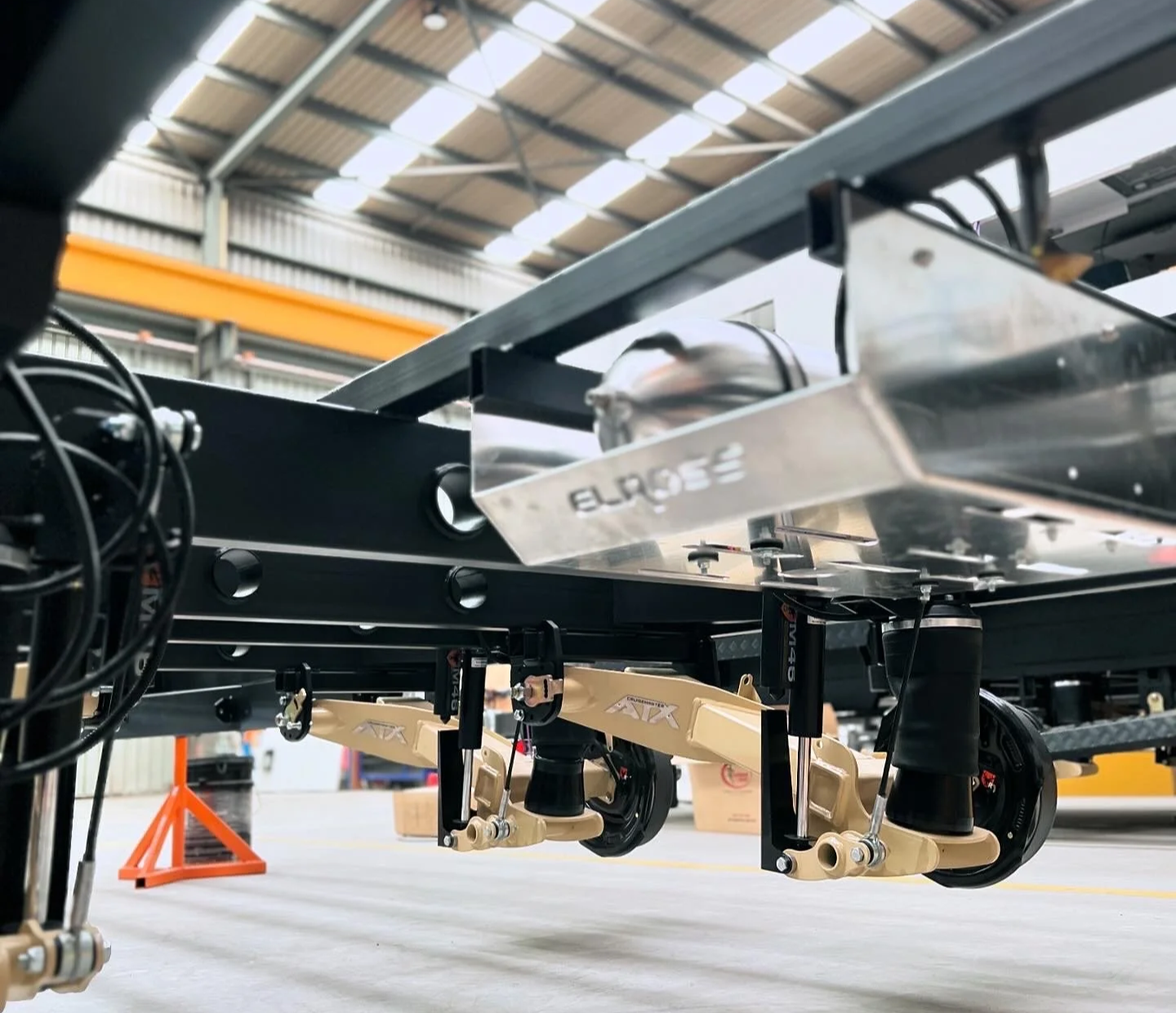
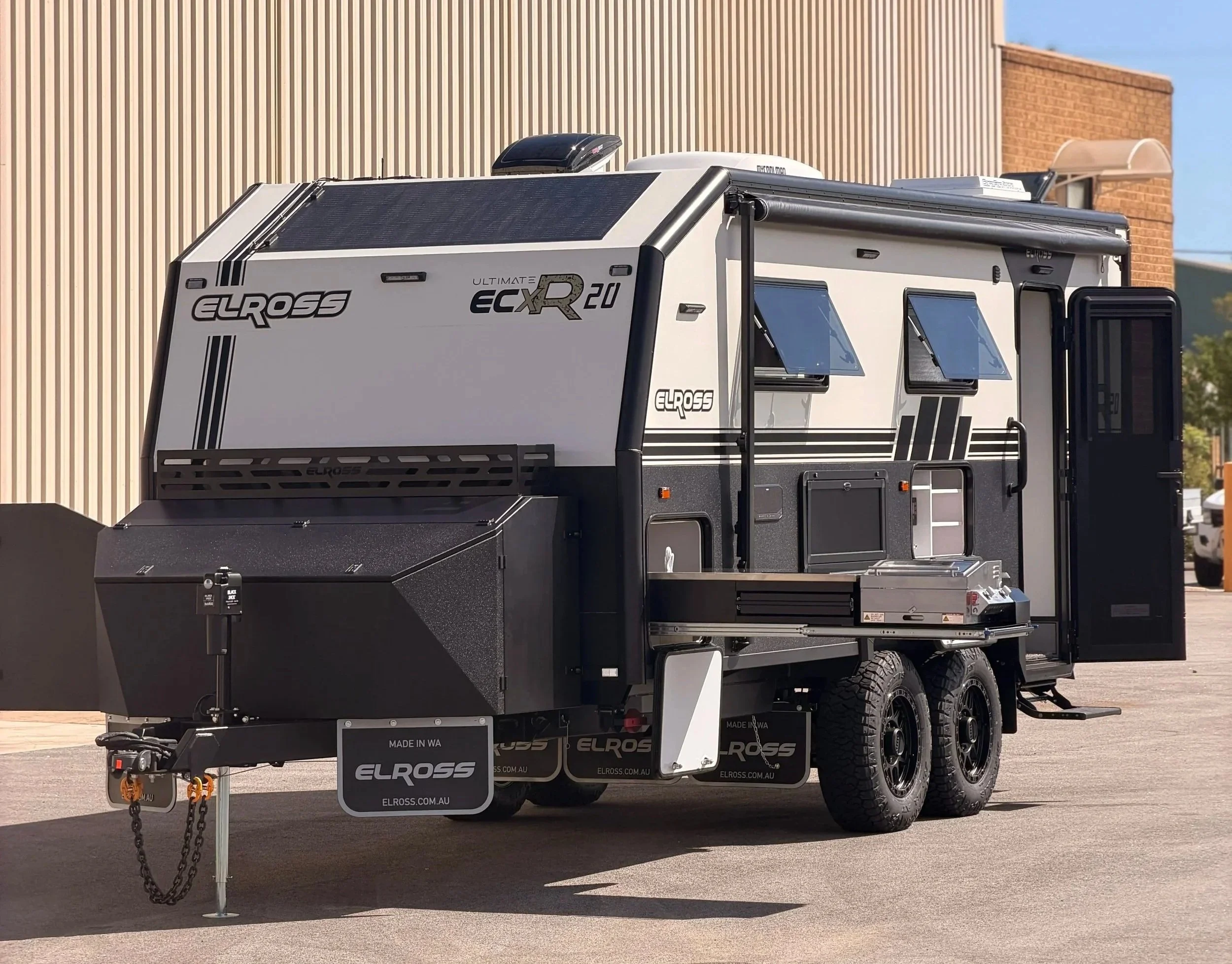
ATX is generally paired with our ECX-R (Ultimate Off-Grid builds)
higher-end specification ⭐
more complex off-grid systems 🔋☀️
greater focus on ride quality and refinement 🚨
Yes, XTF is the more cost-effective option.
But the real reason behind the pairing is about fit for purpose.
Serviceability — Where the Real Differences Show Up
This is something I spend a fair bit of time explaining if we get emails or visits for factory tours, because it’s not always obvious upfront.
The ATX is a later-generation system, and you can see that in the engineering.
There’s been more development, more refinement, and more thought put into:
long-term usability
alignment stability
serviceability
A good example of this is the cam-locking dowel positions used to lock in caster.
What that means in practical terms:
alignment stays more consistent
it doesn’t move as much between services
it’s generally more straightforward to bring back into spec
With the XTF, there’s nothing inherently wrong with it — it’s a solid system.
But it’s:
more basic in its design
a bit more hands-on over time
more likely to drift slightly out of alignment between service intervals
So naturally, it can require a bit more attention.
Shock Absorbers — A Practical Difference
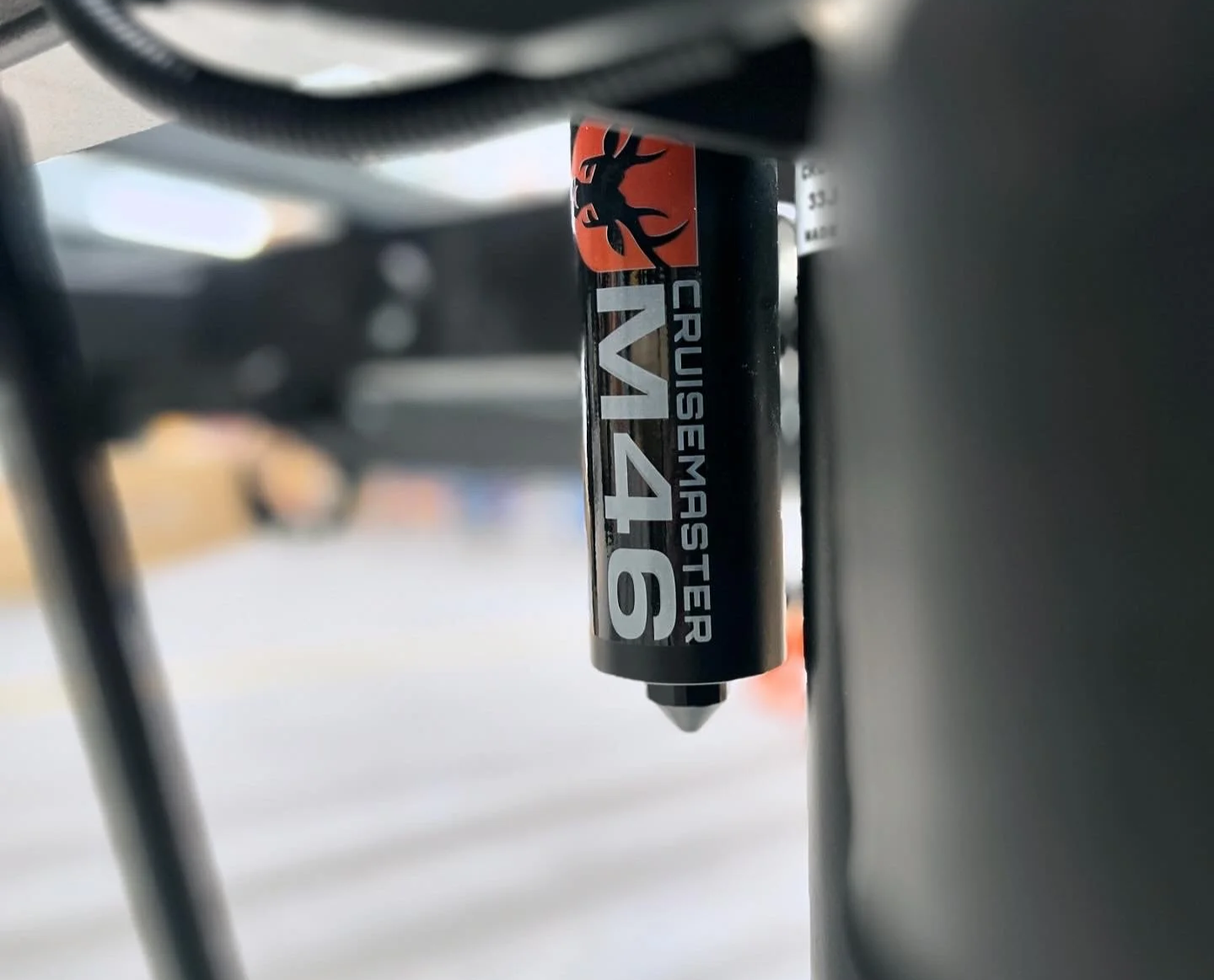
Another point I raise with customers is on shock replacement.
With XTF:
shocks are generally replaced sooner
they’re less expensive individually
but there are twice as many
With ATX:
fewer shocks
generally longer service life
more refined performance
Replacement for one is more costly due to the Remote resivour design.
It’s not a deal breaker either way — but it’s something worth understanding upfront when your mapping out on which direction you are considering to head.
Weight — One of the Biggest Factors
This is a big one. And I always bring it up during emails or when customers are touring the factory.
Speaking of which, Book your own personal tour at our Perth Production facility here - Factory Tours. Just remember that enclosed foot wear is required. No Bloody thongs! ❌
Anyway, The ATX is heavier. There’s no way around it.
It’s:
beefier
more robust in its construction
designed for higher performance and load handling
And that comes with a weight penalty.
Depending on your build and tow vehicle, that can matter.
The XTF, being a simpler system, is:
lighter
more straightforward
often better suited where weight is a consideration
So this becomes part of the overall decision — not just performance, but how it affects the entire van setup.
When XTF Makes the Most Sense
If you’re someone who:
spends a lot of time off-road
travels remotely across WA
carries consistent loads
values reliability and simplicity
Then XTF is a very solid option. It was their premier suspension before the ATX system developed.
It’s:
tough
proven
predictable
For a lot of touring setups, it does exactly what’s required.
When ATX Becomes the Better Fit
When the build becomes more advanced, the requirements shift.
I generally recommend ATX when:
ride quality becomes more important
you want more control over how the van behaves
the van itself is a higher-end, fully off-grid, long term setup
you’re comfortable with the added weight
ATX gives you:
more refinement
better control
stronger overall capability
It complements a premium build where performance and feel matter more, and perhaps the ego a little bit when you pull up to those park stays.
The Part Most People Miss
This is the key point. Suspension alone doesn’t determine how a van performs.
What really matters is:
how it’s integrated into the chassis
how weight is distributed
how the entire system works together
You can’t separate suspension from the rest of the build.
If that’s not right, the suspension choice won’t fix it.
If you want a better understanding of that side of it, this breaks it down properly:
👉 Chassis and Suspension Construction
My Personal Take
If I’m being completely straight with you:
And money wasn’t a factor — I’d take the ATX.
Reason being:
better serviceability long term and concurrently while using the van ✅
more refined engineering ✅
stronger, more capable overall platform ✅
But that doesn’t make XTF the wrong choice.
Far from it.
XTF is still:
a very capable off-road suspension ✅
well suited to Australian conditions ✅
proven across a lot of serious touring setups ✅
It just comes back to what suits your build and your priorities.
Final Thought
I’ve seen people choose suspension based on specs or opinions online. That’s usually where it goes pear shaped down the track.
The better approach is to match the suspension to:
how the van is built
how it’s going to be used
what you actually expect from it
Get that right, and everything else falls into place ✅
If You Want to take the next step
I’d also suggest reading this blog post if you haven’t already:
👉 WA off-road chassis and Suspension - The Elross way
It’ll give you a clearer understanding of why suspension is only one part of the bigger picture.
And if your now ready to take it to that next level, why not book a VIP discovery meeting and we can get you set up with the right model for your next purchase.
That’s enough from me from now, the pen on the next article will be handed over to our Design guru Naz, because ive got writers cramp from all this blogging. ✒️
Ciao For now.