What's Behind the Walls? Why Caravan Body Construction Matters More Than You Think
When shopping for a new caravan, it's easy to become focused on the visible features.
Floorplans. Battery capacity. Solar panels. Suspension. Water storage.
While these are all important considerations, one of the most critical parts of any caravan is something you'll rarely see once it's finished.
The body construction.
It forms the structural backbone of the caravan and has a direct influence on durability, towing performance, thermal efficiency, water resistance. Yet for many buyers, it's one of the least understood aspects of caravan design.
Understanding how a caravan is built can often tell you far more about its long-term performance than a specification sheet ever will.
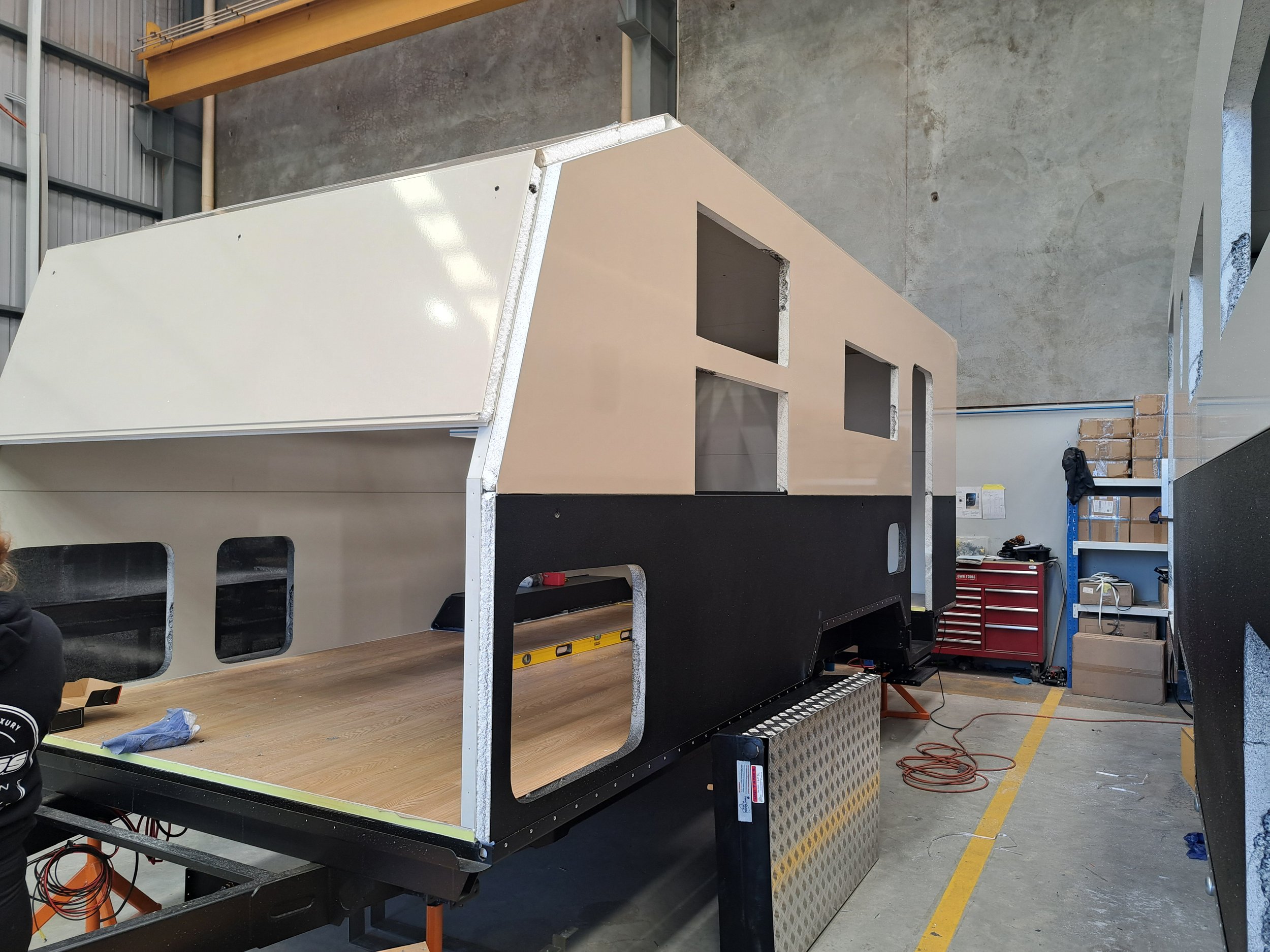
An ECX-18.5 Wall Construction progress
A Caravan Lives a Hard Life
Unlike a house sitting on a concrete slab, a caravan is constantly moving.
Every journey subjects the body to thousands of small movements as it travels across highways, gravel roads, corrugations and uneven terrain. Braking, acceleration, cornering and twisting tracks all place continual stress on the structure.
During its lifetime, an off-road caravan may experience hundreds of thousands of kilometres of vibration and chassis movement.
The body needs to withstand this movement while remaining rigid, weatherproof and structurally sound.
That is why the engineering behind the walls is just as important as the appliances fitted inside them.
It Starts With the Chassis
Every caravan is only as good as the platform it is built upon.
The chassis isn't simply something to bolt a body onto. It forms the foundation that supports every wall, cabinet, appliance and system throughout the caravan.
At Elross, every chassis is designed and manufactured in-house to suit the specific model it will carry. This allows us to engineer the correct balance between strength, weight distribution, suspension integration and towing dynamics rather than adapting to an off-the-shelf solution.
Good body construction begins long before the walls are assembled.
It begins underneath.
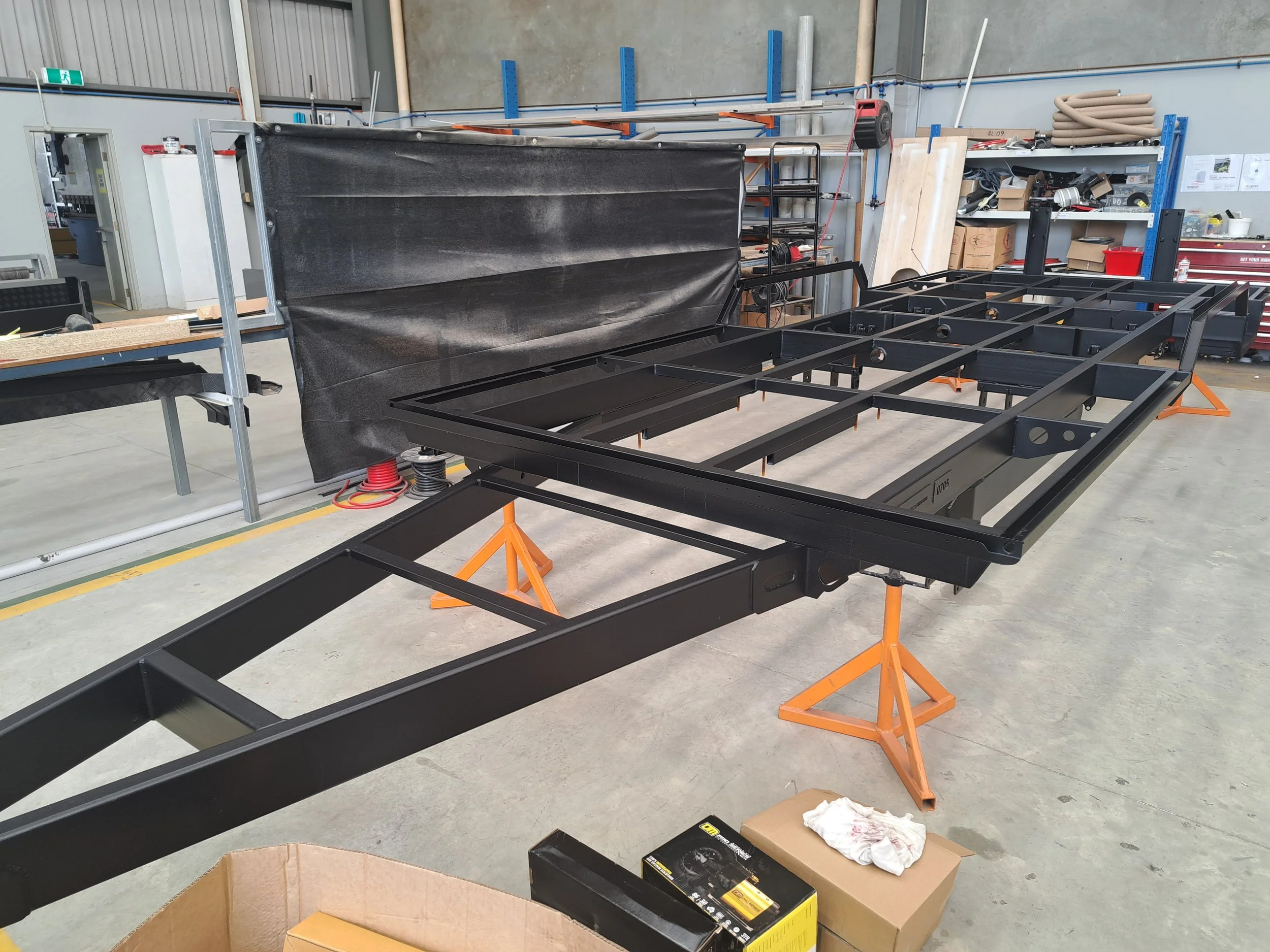
ECX18.5 chassis entering the production line
Composite Construction Has Changed the Industry
Traditional caravan construction often relied heavily on timber framing, Aluminum frame or in older generation Elross a steel frame construction.
Modern composite construction has significantly changed the way quality caravans are manufactured.
By using structurally insulated composite panels, manufacturers can improve rigidity, thermal performance and consistency while reducing reliance on traditional framing methods.
Composite construction also provides improved insulation, helping maintain more comfortable interior temperatures whether travelling through the Australian summer or cooler southern climates.
However, simply using composite panels doesn't automatically produce a better caravan.
The engineering behind how those panels are designed, bonded and integrated remains just as important as the material itself.
Bonding Is Just as Important as the Materials
One of the biggest advancements in caravan manufacturing has been the use of modern structural adhesives.
Rather than relying solely on screws or rivets to hold major components together, structural bonding allows loads to be distributed evenly across large surface areas.
This reduces concentrated stress points and allows the caravan body to better accommodate the small movements that naturally occur during towing.
When combined with appropriate mechanical fastening where required, modern bonding techniques create a stronger and more durable structure designed to withstand years of Australian touring conditions.
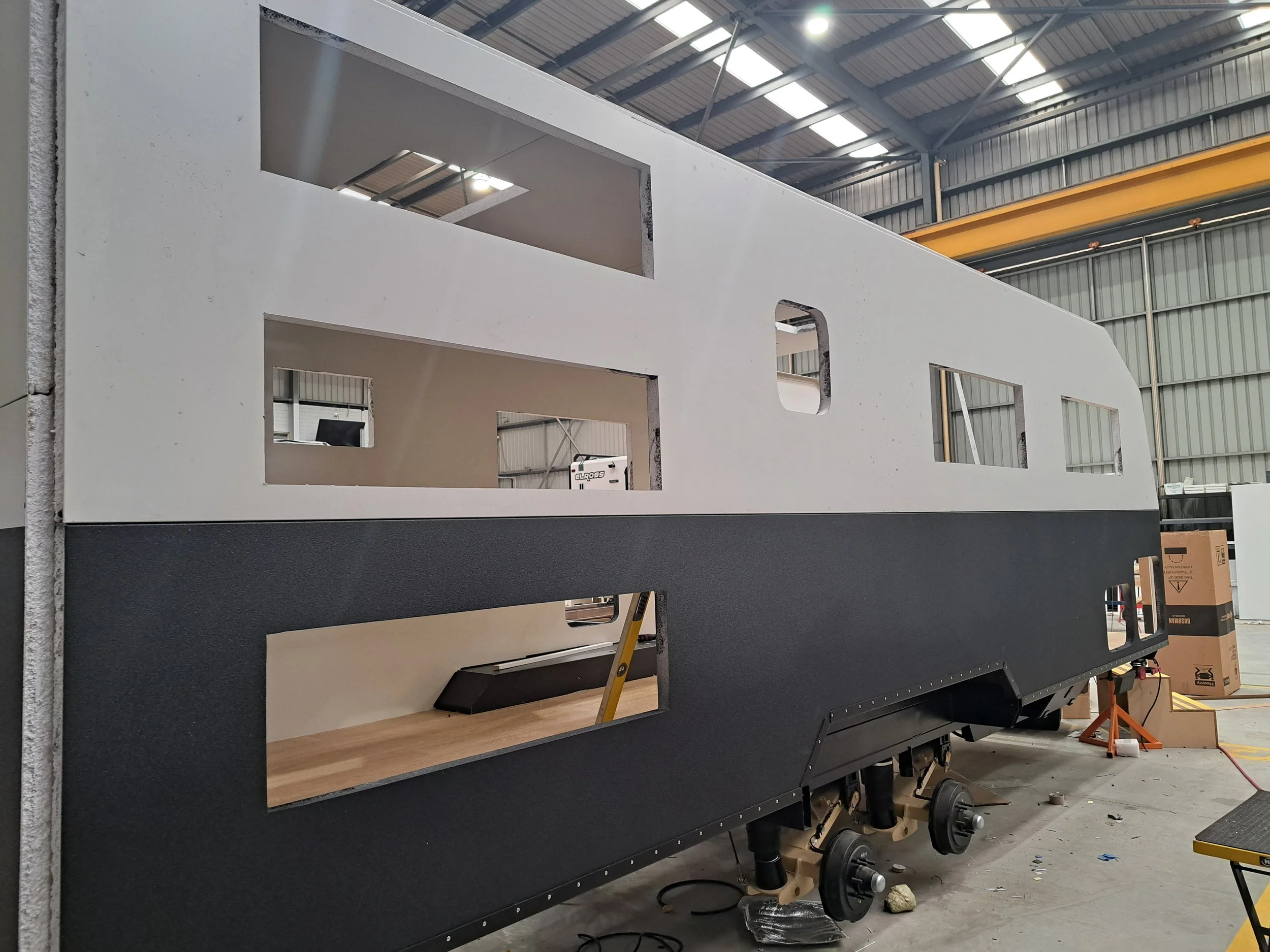
Family Caravan Body completed and bonded to the chassis and other wall components with Polyurethane Adhesives with additional mechanical fastening for durability and strength.
Engineering for Australian Conditions
Australian touring presents unique challenges.
Long distances.
Extreme temperatures.
Dust.
Corrugations.
Remote locations.
These conditions demand a construction philosophy focused on durability rather than simply appearance.
Every design decision influences how the caravan performs when it is thousands of kilometres from the nearest service centre.
Strong body construction, quality sealing, thoughtful engineering and practical serviceability all contribute to long-term reliability in these demanding environments.
Looking Beyond the Specification Sheet
Many caravans appear remarkably similar on paper.
They may share comparable battery capacities, solar systems, appliances or water storage figures.
However, the engineering hidden beneath the cabinetry often tells a very different story.
How the chassis has been designed.
How the walls are bonded.
How the roof is sealed.
How weight is distributed.
How the electrical and plumbing systems are integrated.
These are the details that don't appear in a brochure but often determine how well a caravan performs over many years of ownership.
Questions Every Buyer Should Ask
Before purchasing any caravan, ask the manufacturer:
How is the body constructed?
Is the chassis engineered specifically for this model?
What construction materials are used?
How are the walls bonded together?
What sealing systems are used around windows and roof penetrations?
Can I inspect a caravan during production?
A manufacturer should be comfortable answering these questions openly.
The Elross Philosophy
At Elross, we've always believed that great caravans are built from the ground up.
Our engineering philosophy begins with an in-house designed chassis, followed by advanced composite body construction, carefully integrated systems and manufacturing processes that prioritise long-term durability over production speed.
Every caravan is built with the understanding that Australian touring conditions are demanding.
Our objective isn't simply to produce a caravan that looks impressive in a showroom.
It's to build one that continues performing reliably after years of corrugations, remote travel and countless adventures.
Because when you're exploring Australia's most remote destinations, confidence starts with what's behind the walls.
Learn More
If you'd like to understand more about how Elross caravans are engineered, explore our detailed guides:
Together, these resources provide a deeper understanding of the engineering philosophy behind every Elross caravan and why quality construction remains the foundation of reliable Australian touring.